
Most Beliefs People Try to Change Are Not the Problem
Most of what people call limiting beliefs are on the surface.
Beliefs like:
*I am bad with names
*I am always late
*I cannot stay consistent
*I never finish what I start
These are not foundational beliefs. They matter, but they are downstream.
I call these performance beliefs. They describe outcomes and behaviors, not identity.
When someone struggles to change them, it is rarely because they lack discipline, tools, or information. It is usually because changing the behavior would violate a deeper belief about what they deserve or who they are allowed to be.
Until that deeper belief is addressed, the system resists change.
Not because the person is broken.
Because the system is loyal.
Value Beliefs Are First Order Beliefs
The beliefs that actually govern the trajectory of a person’s life are value judgments about self.
These beliefs quietly answer questions most people never consciously ask:
- What am I worth
- What am I allowed to have
- What level of success, love, peace, or respect fits someone like me
Once those questions are answered, the rest of the belief system organizes itself around protecting those answers.
This is why effort alone often fails.
The mind does not resist change because it prefers suffering. It resists change when the outcome feels incongruent with identity.
The Nervous System Protects Identity, Not Outcomes
If someone holds a belief, even quietly, such as I am damaged goods, the nervous system will resist outcomes that contradict that belief.
Not out of sabotage.
Out of consistency.
The mind unconsciously steers behavior back toward what feels congruent with identity.
This is why people can:
- Learn time management and still be late
- Study money and still cap their income
- Do relationship work and still choose unavailable partners
The system is not broken.
It is loyal to the identity it believes is true.
Meaning Making Is Where Value Beliefs Are Formed
Value beliefs are created through meaning making.
They come from conclusions formed about:
- What someone did or failed to do
- What was done to them
- What they were blamed for, praised for, or ignored for
Events like divorce, bankruptcy, business failure, addiction, being fired, abuse, legal convictions, or public shame are rarely experienced as neutral events.
They are experienced as evidence.
Evidence gets translated into conclusions about worth.
Not because people are weak or irrational.
Because the human mind is wired to explain outcomes.
When no framework exists to separate what happened from what it means about me, the explanation defaults inward.
This happened. Therefore, something must be wrong with me.
How Events Become Internal Verdicts
Nearly everyone has had at least one experience where a moment of failure, loss, or exposure became a character judgment.
Examples include:
- I am irresponsible
- I cannot be trusted
- I ruin things
- I am not built for success
- I am damaged now
Once that meaning is accepted, it does not remain an idea.
It begins influencing behavior, ambition, and expectations.
The belief does not need to be spoken aloud to be active. It only needs to be believed.
Why Habits Do Not Change Without Meaning Change
This is why fixing habits without addressing the meaning that created them rarely works.
The work is not to erase the event or deny responsibility.
The work is to interrupt the automatic conclusion that the event defines worth.
When someone becomes aware of meaning making, they gain something most people never realize they lacked.
The ability to choose what an experience means before it chooses for them.
Why Starting With Value Accelerates Everything Else
When a person believes:
- My value is not variable
- My worth does not shrink based on mistakes, outcomes, or other people’s behavior
- I can separate what I have done or what has been done to me from who I am
Secondary beliefs become much easier to change.
At that point:
- Earning more does not feel like over reaching
- Being loved does not feel suspicious
- Consistency does not feel like pressure
- Growth does not feel like self betrayal
The system no longer has to defend against expansion.
Why Performance Beliefs Fail Without Value Stability
Trying to change performance beliefs without addressing value beliefs is like asking a horse to move forward while pulling on there ins.
You can force movement.
It will not last.
Starting with value beliefs creates leverage.
Leverage changes everything.
Intentional Value Beliefs Are Not Denial
This matters.
Making value beliefs intentional is not pretending the past did not happen.
It is refusing to let the past keep issuing verdicts.
Bankruptcy is a financial event, not a character diagnosis.
Divorce is a relational outcome, not a measure of worth.
Addiction is a coping strategy, not an identity sentence.
Separating what happened from what it means about me is one of the most powerful cognitive moves a person can learn.
What Happens When Value Is Stabilized
Once value is stabilized:
- Identity becomes flexible instead of fragile
- Behavior change becomes sustainable instead of forced
- Smaller beliefs fall faster because they are no longer protecting a deeper wound
If someone wants major progress instead of incremental improvement, intentional beliefs about personal value must come first.
Choosing New Beliefs On Purpose
The next step in intentional beliefs is deciding what you want to believe.
I often ask this question:
What would you believe about yourself if you could believe anything you wanted
Sit with that.
Write it down.
Here are two requirements for new beliefs if you want themto work and work fast.
Requirement One: It Must Feel Possible
The belief does not have to feel true yet.
It must feel possible.
If it does not, ladder the thought until it does.
Requirement Two: It Must Be an Improvement
The belief must feel better than the one it replaces.
If it does not feel good, the nervous system will not adopt it.
A Final Word
If you are struggling to believe you are fully lovable, fully deserving, or fully worthy, I am going to ask you to take my word for it.
There is nothing you have done and nothing that has been done to you that disqualifies your value.
Remember that.
And remember, You cannot fail as long as you Don’t Ever Stop Chasin’ It.
If you want help with yourfoundation so you can excel, or if you want me to light up your organization with a speech or training, contact me at stablelivingcoaching.com
FREE RESOURCE


Want stronger, closer relationships with your kids, your spouse, and everyone who matters most?
You deserve it. And you can!
Sign up for weekly tools to communicate better, connect deeper, and create more trust and love in every relationship.
Your guide to understanding yourself and the people you love on a whole new level.
Sign up here:
Thank you! Your submission has been received!
Oops! Something went wrong while submitting the form.

FREE RESOURCE
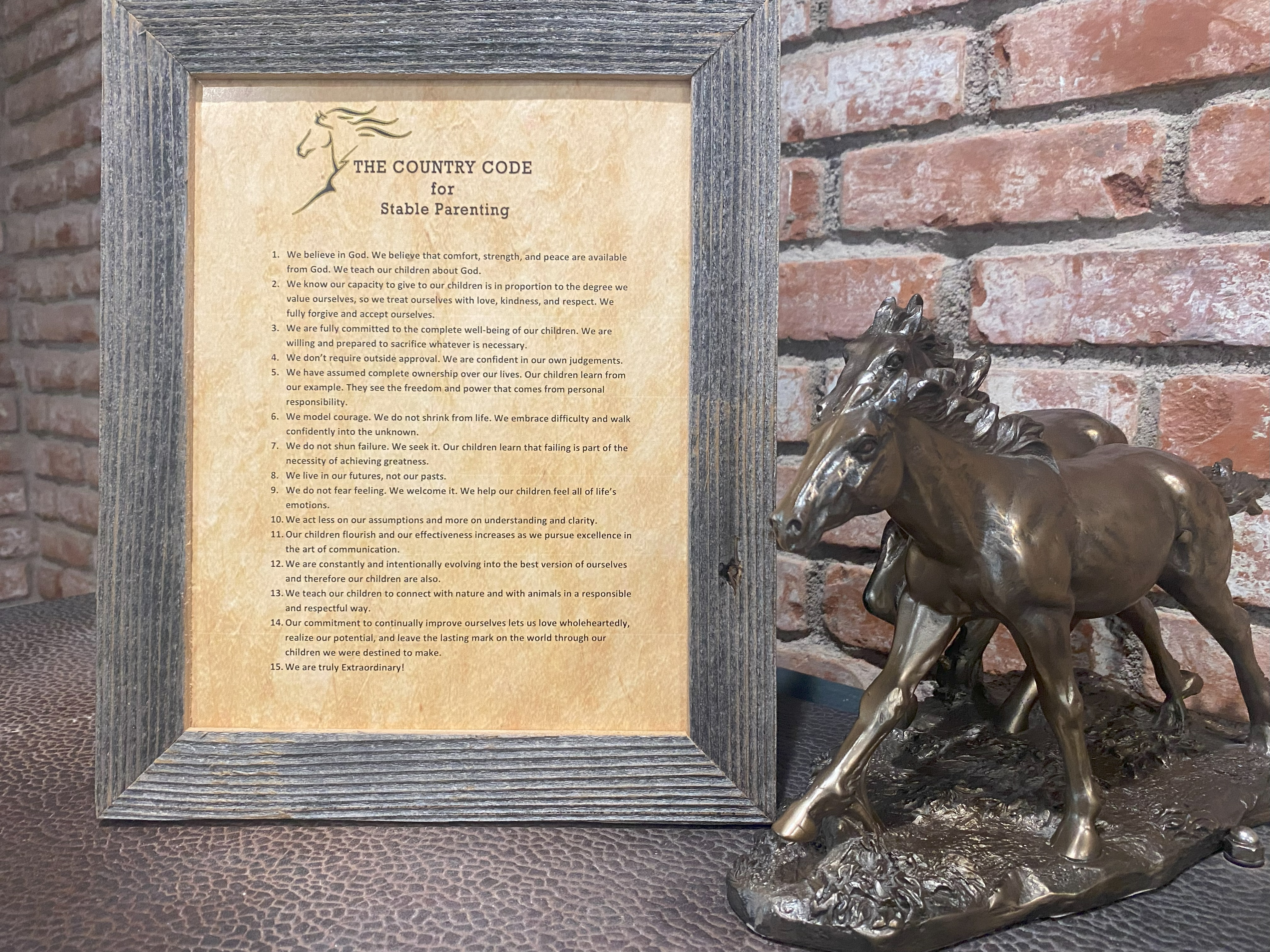
The Country Code for Stable Parenting:
Inspiration for parents. Enter your info below to get a free printable, frameable copy of The Country Code for Stable Parenting.
Print it. Frame it. Live It. Love It.
Live by the Country Code. It’s time to Thrive!
Print it. Frame it. Live It. Love It.
Live by the Country Code. It’s time to Thrive!
Thank you! Your submission has been received!
Oops! Something went wrong while submitting the form.