Why Parents Criticize Themselves
When parents make mistakes, they often feel like it’s their duty to punish themselves. The reasoning usually sounds something like this:
- "If I chastise myself, I’m showing how much I care."
- “By berating myself, I’ll do better next time."
- "A good parent wouldn’t have let this happen."
Let’s challenge that thinking. Two real-world examples:
1. A mom of toddler twins hears one child crying and picks them up, only to discover later that her three-year-old drank something unsafe. Thankfully, the child is fine, but the mom repeatedly tells herself, “I can’t believe I let this happen. He could’ve died.”
2 .Another mom of an infant places her baby on the bed to grab clothes, only to see the baby roll off and hit the floor. The baby is fine, but she believes, “A good mom wouldn’t let that happen.”
Both moms were consumed by shame. They thought their mistakes defined their parenting. But does berating yourself for unintentional mistakes actually help? No.
The Hidden Costs of Parental Self-Criticism
Self-Criticism Undermines Confidence
When parents tear themselves down, they erode their own confidence. Children learn how to handle mistakes by watching their parents. If your response to failure is self-loathing, your kids will internalize this behavior.
- They’ll develop self-critical tendencies.
- They may struggle with self-esteem and emotional regulation.
Research backs this up: Studies on self-compassion show that kindness toward oneself builds emotional resilience and fosters healthier relationships, which are essential for good parenting. (Neff, 2011)
Self-Criticism Models Harmful Behavior
Kids learn more from what you do than what you say. If they see you berating yourself for forgetting their lunch or making a mistake, they’ll adopt that same harsh self-talk. This can lead to:
- Perfectionism.
- Fear of making mistakes.
- Difficulty developing self-compassion.
Example: A child who hears, “I’m such a terrible mom for forgetting your lunch,” might grow up thinking mistakes define worthiness.
Self-Criticism Creates Emotional Disconnection
When parents are consumed by guilt or shame, they often withdraw emotionally. This disconnection can leave children feeling unsupported, unseen, or even responsible for their parent’s distress.
Research: Parent-child attachment studies show that emotional availability is critical for healthy child development. When parents are stuck in self-criticism, their emotional presence suffers. (Bowlby, 1988)
The Better Approach: Modeling Self-Compassion
What if, instead of tearing yourself down, you modeled what you’d want your kids to do? By treating yourself with kindness, you teach your kids:
*Mistakes are part of learning.
*Self-compassion leads to better outcomes.
*Growth is possible without fear of harsh judgment.
Research: Parents who practice self-compassion raise children with lower anxiety levels and greater emotional resilience.(Psychology Today, 2020)
Practical Steps to Shift Your Mindset
It’s not enough to stop the self-criticism. You need to replace it with positive, proactive behaviors. Here’s an exercise I recommend:
1. Use a Notes App or 3x3 Card
Create two lists:
- Label one "I Believe" and highlight it in green.
- Label the other “Not Me” and highlight it in red.
2. Listen to Your Thoughts
Pay attention to your self-talk throughout the day.
3. Record Your Thoughts
- Positive, empowering thoughts go in the green list.
- Negative, self-critical thoughts go in the red list.
4. Review Your Lists Daily
By the end of the day, ensure your green list is longer than your red list. If it’s not, add more positive thoughts.
Conclusion: You’re Doing Better Than You Think
Ask yourself this: How do you want your kids to respond when they make mistakes? Most parents answer, “I want them to forgive themselves, love themselves, learn, and move on.”
Then lead by example. Forgive yourself. Learn. Love yourself. Move on. Belittling yourself doesn’t make you a better parent, it just teaches your kids to do the same to themselves.
You care deeply about your children, and that alone shows you’re doing better than you think. Focus on what you’re doing well, and model the kindness you want your kids to show themselves.
For more guidance, explore my coaching services at Stable Living Coaching.
FREE RESOURCE


Want stronger, closer relationships with your kids, your spouse, and everyone who matters most?
You deserve it. And you can!
Sign up for weekly tools to communicate better, connect deeper, and create more trust and love in every relationship.
Your guide to understanding yourself and the people you love on a whole new level.
Sign up here:
Thank you! Your submission has been received!
Oops! Something went wrong while submitting the form.

FREE RESOURCE
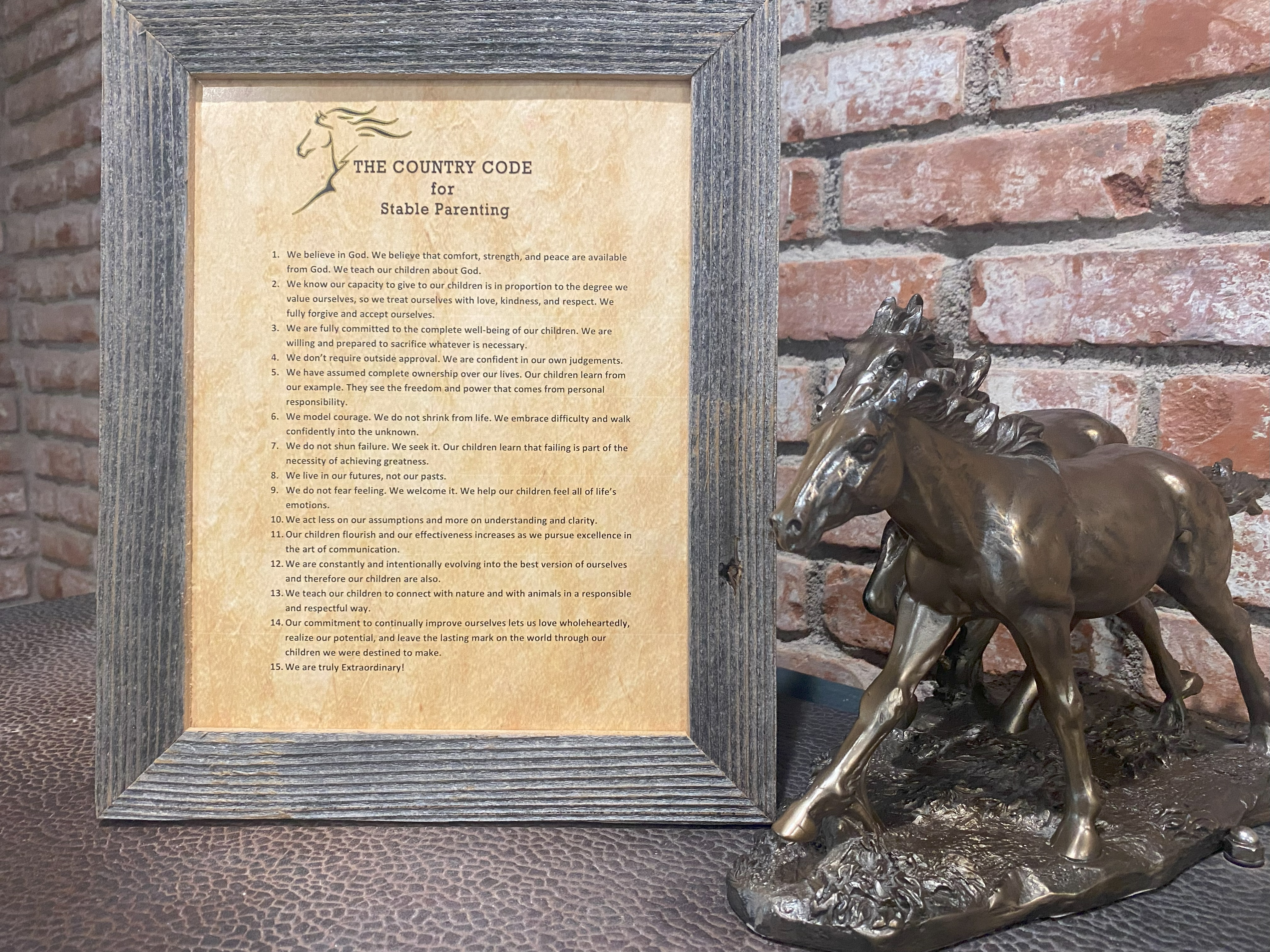
The Country Code for Stable Parenting:
Inspiration for parents. Enter your info below to get a free printable, frameable copy of The Country Code for Stable Parenting.
Print it. Frame it. Live It. Love It.
Live by the Country Code. It’s time to Thrive!
Print it. Frame it. Live It. Love It.
Live by the Country Code. It’s time to Thrive!
Thank you! Your submission has been received!
Oops! Something went wrong while submitting the form.